
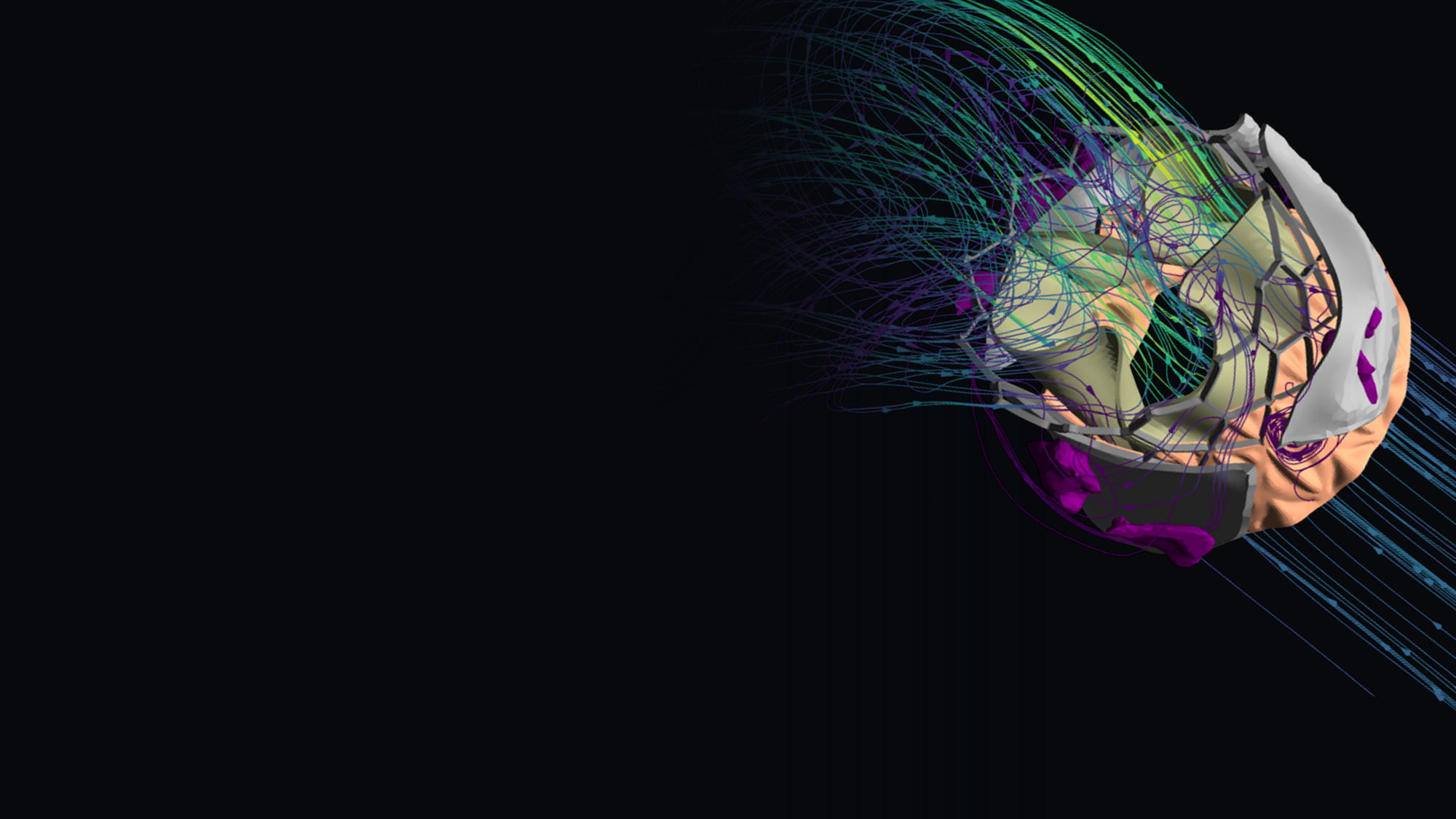
Heart valve simulation from early design to regulatory evidence
Better heart valve development decisions
with Fluid-Structure Interaction simulations.
Reveal how design, deployment, anatomy, leaflet motion and blood flow influence valve performance.
We partner with simulation teams and R&D leaders to support valve design, preclinical evaluation and regulatory evidence generation using coupled Abaqus and FlowVision FSI.
With Medividia from ideation to market
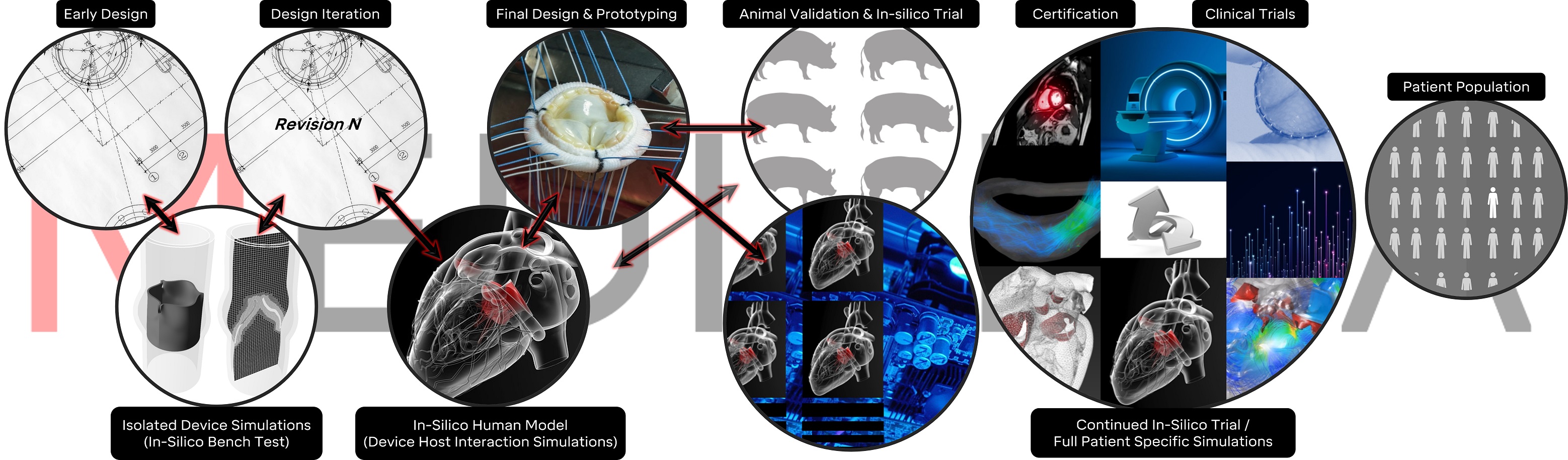
From early design to simulation evidence that complements clinical data
and supports regulatory submissions.
Start with a focused design comparison, add FSI to your existing simulation capabilities, or integrate a complete evaluation pipeline with validation and traceability into your device program.
Design Screening
and Virtual Bench Testing
Screen design concepts, compare performance tradeoffs and evaluate selected candidates under physiological or standardized virtual bench conditions before committing to physical prototypes and testing.
Patient-Specific Simulation
Evaluate device performance in patient anatomies reconstructed from clinical data or in systematically generated virtual patients, including variations in sizing, deployment and physiology.
Clinical and Regulatory Support
Complement bench and clinical data, investigate observed outcomes and generate traceable simulation evidence addressing device performance and variability for regulatory submissions.
Finite element analysis
CFD
FSI
Virtual bench
Patient-specific simulation
In silico trials
How FSI accelerates development
Discover risks while the design can still change.
Support clinical and regulatory programs with simulation evidence.
FSI can reveal design weaknesses and identify the design or deployment variables behind them. Engineers can apply a targeted correction and test its effect virtually before producing the next prototype. The improved design can then advance to patient-specific simulation under realistic clinical conditions and ultimately contribute to regulatory evidence.
- 01Discover potential failure modes before physical testing
- 02Identify the underlying failure mechanism
- 03Test a targeted correction before the next prototype
- 04Evaluate performance under virtual in vivo conditions
- 05Support clinical and regulatory programs with simulation evidence
Deployment Decisions
Which deployment is better?
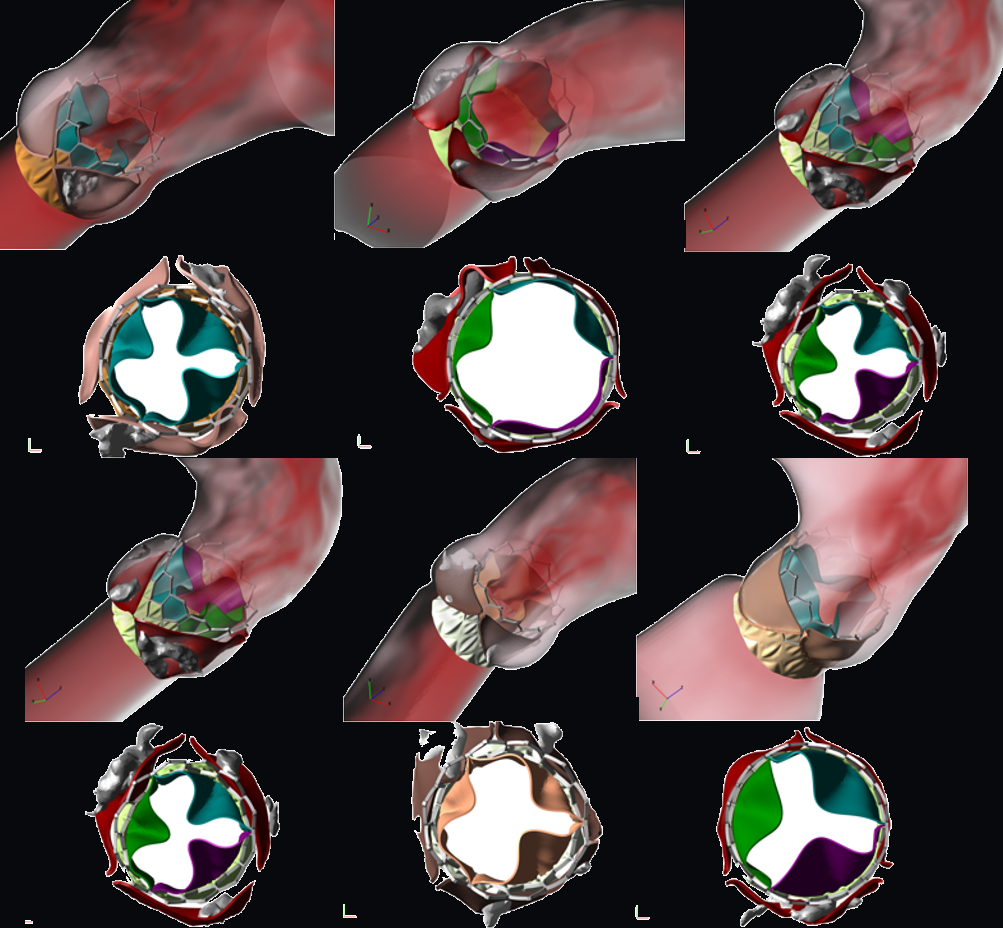
Compare how deployment position changes leaflet opening and closure. Use the coupled response to investigate the tradeoffs before selecting the next configuration to test.
Device and Anatomy
How does the device fit this anatomy?
Bring the frame, leaflets, surrounding tissue and calcification into the same model to investigate the deployed configuration.
Applications: Heart Valves and Beyond
Validated heart valve workflows and specialized simulation technology
for blood-contacting devices.
Our team has been modeling and simulating heart valves since 2008, supporting global manufacturers and developing tailored simulation software for blood damage and thrombogenicity assessment. This expertise extends to blood pumps, including LVADs and RVADs, PFO, ASD and LAA occluders, filters and other blood-contacting devices.
Heart Valve FSI
Device + Blood + Anatomy.One system, as in real life.
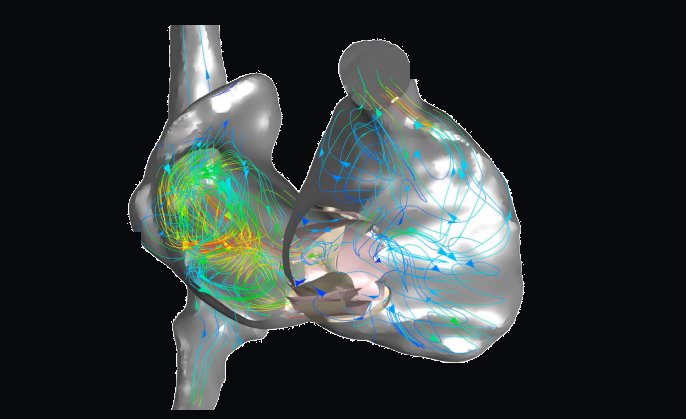
Assess leaflet kinematics, coaptation and stress together with the coupled hemodynamic response, including pressure gradients, regurgitation and washout, under realistic virtual bench and in vivo conditions.
Explore FSI simulations of heart valvesBeyond Heart Valves
Reveal the flow mechanisms shaping the performance and safety of blood-contacting devices.
Use advanced FSI and multiphysics CFD to evaluate device performance, flow fields, shear exposure, and indicators of blood damage and thrombogenicity.
Explore cardiovascular applicationsHow We Work
Engage us for a pilot, a full-scale program
or an investment in future simulation capability.
Partner with a highly specialized simulation team that adapts to your organization, at any phase of development and any level of complexity. Work with us for hands-on simulation delivery, software integration or tailored technology development.
Turnkey FSI solutions
The engineering questions and quantities of interest are defined by you. Modeling, verification and reporting are carried out by us. We then work together to interpret the results and support better-informed development decisions.
Add FSI capability to your team
We work with your simulation team to implement our validated, streamlined FSI workflows, from virtual bench testing to patient-specific studies, and equip your engineers to apply them in future projects.
Tailored software, automation and model development
We welcome new engineering challenges. Working with your team, we develop tailored software, automate workflows, and improve and extend our own simulation models to support your device program.
Trustworthiness: Verification & Validation
Credibility built on structured verification and validation
for the intended context of use.
Explore how our software is verified, numerical accuracy is checked in each simulation campaign, simulations are compared with physical measurements, and uncertainties are assessed for their impact on results and decisions. Confidence in our software and workflows comes from transparent, well-documented processes.
Validated Valve Performance and More
Blind validation studies compare predicted TPG, EOA and RF with measurements across multiple valves and operating conditions. Selected studies also examine leaflet contact, flow fields and kinematics.
Request our valve validation dataRobust and Reliable Toolset
We combine Abaqus structural simulation with FlowVision fluid dynamics in a robust FSI workflow for capturing the coupled behavior of valves and other blood-contacting devices.
Request our FDA benchmark comparisonsAerospace-Inspired Quality Control
Structured checklists, documented formulations and systematic cross-checks bring aerospace-inspired discipline to simulation delivery, helping reduce the risk of human error in manual operations.
Start a Conversation
Let’s explore how we can work together.
Tell us about your device program, engineering questions or the simulation capability you want to build. We’ll help identify a practical next step.